
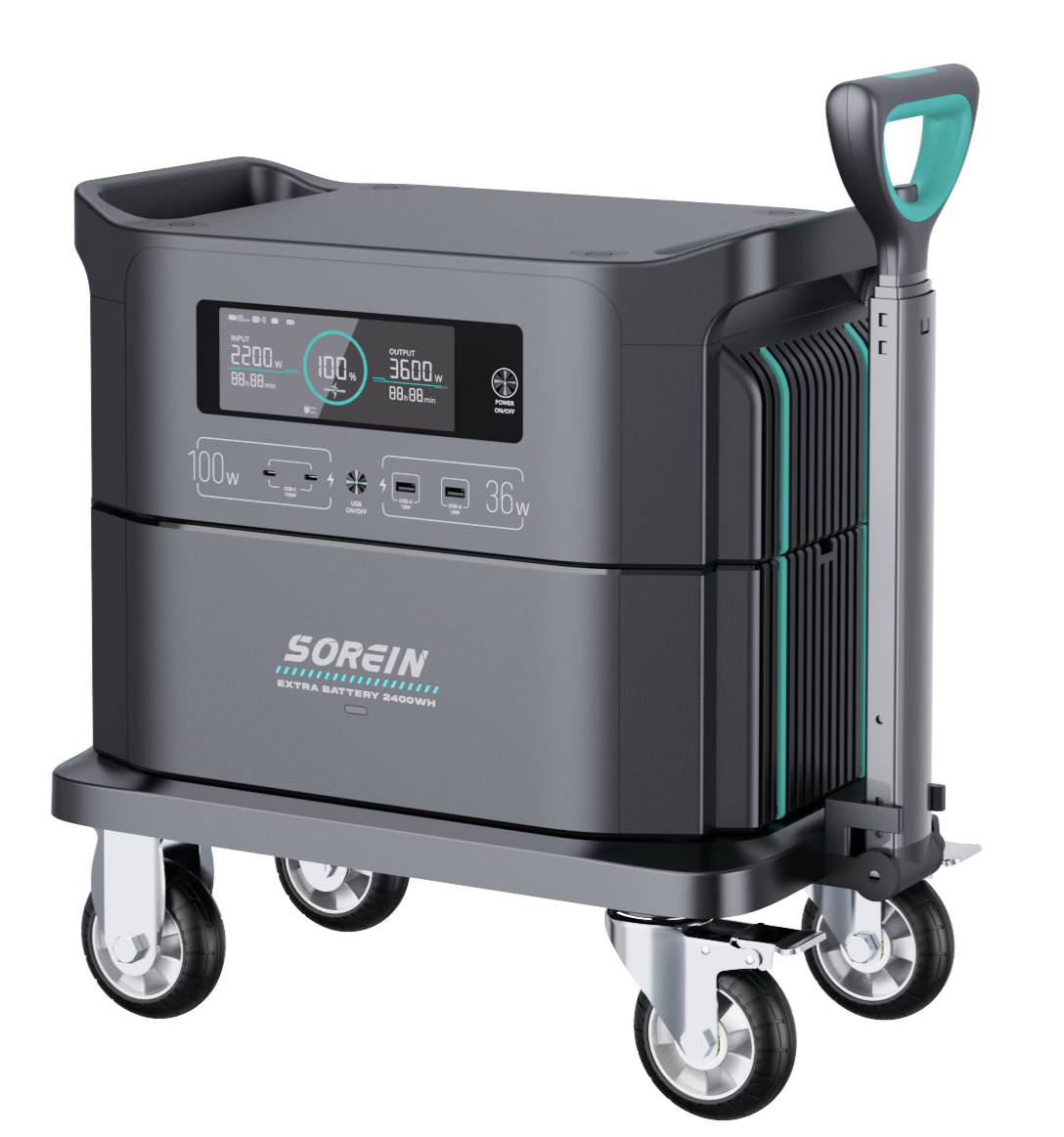
A modular power station separates the inverter brain from expandable battery modules. A traditional power station seals everything in one box. Here is how the two architectures compare where it actually matters.
01
The portable energy market is splitting in two
The portable energy storage market is evolving faster than ever. Just a few years ago, consumers were thrilled with a simple all-in-one box capable of keeping a laptop running during a blackout. Today, energy demands have shifted toward whole-home backup, off-grid living, and sustainable solar integration. As these demands grow, the limitations of traditional power stations become obvious: once the battery is full, you cannot expand it. You must buy an entirely new unit. This rigid ceiling has paved the way for a new generation of technology: the modular power station. By offering a stackable power station design with an expandable battery ecosystem, these systems are changing how we think about portable and home energy.

02
What Is a Modular Power Station?
A modular power station is an energy storage system designed with a separable architecture. Unlike a monolithic block, this system consists of a G2400 main base and battery module: the base contains the inverter, outlets and control logic, and detachable battery modules stack on top of one another. This stackable power station architecture means you no longer need to predict your exact power needs on day one.

How Modular Battery Systems Work
The base station operates as the brain, while the expandable battery packs act as the limbs. Communication happens through high-voltage connectors between the stacks. When you attach an extra battery module, the Battery Management System (BMS) automatically recognizes the added capacity and balances the cells instantly.
Why Stackable Design Matters
The vertical stacking mechanism saves floor space while maximizing energy density. Instead of wiring multiple separate units together with messy cables, a stackable battery storage solution clicks together seamlessly.
Benefits of Expandable Battery Architecture
The most obvious benefit is flexibility. You can start with a smaller capacity for weekend camping and later scale up to a massive system for home backup. This architecture also simplifies maintenance; if one lfp stack battery module degrades prematurely, you replace only that module—not the entire power station.
03
What Is a Traditional Power Station?
A traditional power station is an all-in-one, unibody device where the battery cells, inverter, charge controller, and outlets are sealed inside a single rigid enclosure. Brands have popularized this category as a "solar generator," often confusing it with gas units. This category is still widely referred to as the standard portable power station.

Fixed Battery Design
The battery capacity is static. If you purchase a 1,000Wh unit, it remains a 1,000Wh unit forever. There is no mechanism to bolt on additional storage without a confusing array of third-party cables and external batteries that often bypass the internal BMS.
Integrated Power Architecture
Everything shares a common thermal zone. The heat from the inverter directly impacts the internal lithium cells. While this integration allows for a compact footprint initially, it creates a single point of failure.
Common Consumer Applications
These are ideal for predictable, lightweight scenarios: charging camera gear on a photoshoot, powering a CPAP machine for a single night, or providing emergency power to a router.
04
Modular Power Station vs Traditional Power Station: Architecture Comparison
To understand the physical differences, we need to look at the bones of each system. A modular power station separates the power brain from the storage pool, while a traditional unit marries them permanently.
This table highlights a critical shift: a stackable power station treats energy as a long-term investment, whereas traditional designs treat it as a disposable consumer gadget.
| Feature | Modular Power Station | Traditional Power Station |
|---|---|---|
| Battery Expansion | Yes, user-replaceable expandable battery packs | No, sealed internal battery |
| Portability | Component-based (carry one piece at a time) | Single carry handle (limited by weight) |
| Maintenance | Highly maintainable; replace individual modules | Difficult; often requires full teardown |
| Lifespan | Extended; swap dead modules | Limited by the weakest internal cell |
| Scalability | High (2.4kWh to 9.6kWh per system, up to 55.2kWh linked) | None |
| Solar Integration | High-voltage MPPT for large arrays | Standard MPPT for moderate arrays |
| Upgradeability | Add fresh battery chemistry packs | Obsolete when battery degrades |
05
Battery Technology Comparison
The chemistry inside the casing matters more than the shell. Most modular power station systems have abandoned older lithium-ion chemistries in favor of Lithium Iron Phosphate (LiFePO4).

What Is an LFP Stack Battery?
An lfp stack battery uses Lithium Iron Phosphate as the cathode material. Unlike standard lithium batteries that may use metal oxides, LFP cells feature an olivine structure that is incredibly stable. When configured as a stackable battery storage block, these packs deliver consistent voltage from full to empty without dramatic sag.
LFP vs NMC Battery
Nickel Manganese Cobalt (NMC) batteries offer slightly higher energy density per kilogram, which is why some traditional portable power station units still use them to save weight. Both chemistries are sold in consumer power stations and both are built with protection systems; the practical difference is thermal margin. LFP cells have a higher thermal runaway onset temperature and tolerate abuse — overcharge, puncture, sustained heat — with more headroom, which is why most modular systems and a growing share of all-in-one stations have moved to LFP. An lithium iron phosphate battery also holds voltage more steadily as it drains and carries a higher cycle rating.
Why LFP Is Better for Expandable Systems
Modular battery system designs require frequent physical handling. Users are sliding packs onto terminals and occasionally disconnecting them. The LFP modules we ship are rated for about 4,000 charge cycles before hitting 80% capacity, which perfectly aligns with the expandable battery philosophy of long-term ownership. The stability of LFP ensures that stacking five modules does not create a dangerous thermal mass.
06
Scalability and Expandability
The "modular" advantage is not just a marketing buzzword; it changes how you use the machine. This scalable energy storage design allows the user to redefine the product's purpose based on the situation.

How Expandable Battery Systems Scale
Let's say the base unit delivers 3,300W from one AC channel in the US specification. Initially, you buy it with one 2.4kWh expansion battery module. For a standard camping trip, that 2.4kWh is enough. If a winter storm arrives, you can clip on two extra battery modules, instantly jumping to 7.2kWh without touching a single cable or altering your solar input settings. Adding inverter channels raises output independently of capacity, and linked US configurations reach 16.5kW.
Advantages for Home Backup
For home backup, a fixed 3kWh battery might keep a fridge running for half a day. G Series configurations scaled into a home backup battery wall can keep the fridge, lights, and even the gas furnace blower running for days. The redundancy is vital; if a traditional unit fails, the house goes dark. If one stackable power station module goes offline, the others continue to provide power seamlessly.
Energy Flexibility for Off-Grid Use
Living off-grid requires adjusting to seasonal solar variations. In summer, you might need only minimal storage as the sun is plentiful. In winter, you can dramatically scale up your expandable battery reserves to compensate for heavy cloud cover. This makes a modular unit the ultimate off-grid power solution.
07
Portability and User Experience
There is a false assumption that modular equals bulky.
Lightweight Traditional Systems
A standard portable power station excels when portability means carrying one box under your arm for a weekend. If you solely need to charge a laptop and a drone, a 500Wh traditional brick is hard to beat for grab-and-go simplicity.
Flexible Stackable Power Station Design
For larger capacities, the stackable power station wins the ergonomic battle. Moving a 22kg battery module and a 9.5kg base separately is manageable for one adult. Moving a 60kg monolith is not. The modular design lets you transport the system in manageable chunks.

Real-World Usage Scenarios
If you park an RV semi-permanently, you can leave the stacked tower in the rig while bringing the base unit home for a weekend picnic. This separation of function—power ingestion vs. storage—is only possible with a modular battery system.
08
Solar Charging and Energy Ecosystem Integration
The synergy between solar panels and power stations is critical for true energy independence.
Solar Expansion Capability
Modular units generally support a wider voltage range of solar input. Because the stackable voltage of the lfp stack battery is high (often 48V or higher), the built-in MPPT controller can efficiently convert power from long strings of residential solar panels without bottlenecking.
Smart Energy Storage Systems
Many modern modular power station bases act as an Energy Management System (EMS). They prioritize solar charging, automatically switch to battery during peak utility rates, and even feed power back to specific circuits. This turns a simple solar generator into an intelligent household hub.
Off-Grid Energy Management
An off-grid power solution relying on a single traditional unit often requires manual intervention to conserve power. A modular smart energy storage system can isolate individual modules to reduce idle self-consumption, stretching every watt of stored solar energy.
09
Long-Term Cost and Maintenance Comparison
The upfront sticker price can be deceptive. A lifecycle analysis reveals the economic truth.
A modular battery system that uses lfp stack battery chemistry almost always wins the total cost of ownership battle. Instead of trashing a functional inverter because the internal battery has died, you simply recycle the depleted module and buy a fresh expandable battery. This prevents electronic waste and keeps long-term expenses predictable. Before committing to a capacity, compare G Series configurations side by side on output, weight and price.

| Cost Factor | Modular System | Traditional System |
|---|---|---|
| Initial Cost | Higher for base + modules | Lower for similar starting Wh |
| Battery Replacement | Low; swap an expandable battery pod | High; buy a brand new unit |
| Lifespan | LFP modules rated 4,000 cycles to 80% (about 10+ years at one cycle a day) | Chemistry-dependent: LFP all-in-ones rate similarly, NMC units fewer; the pack cannot be swapped either way |
| Upgrade Cost | Incremental (add capacity) | Punitive (replace whole unit) |
| Maintenance | DIY module swaps | Shipping to factory center |
10
Which Power Station Is Better for Different Users?
There is no universal "best." The choice between modular power station and traditional power station hinges on your energy trajectory.
Best for Home Backup
Recommended: Modular. A modular home backup setup is the only logical choice for a home backup battery. The ability to expand storage to cover indefinite outages is non-negotiable.
Best for Outdoor Users
Recommended: Modular for base camps; Traditional for ultralight hiking. If you are building an off-grid power solution for a remote cabin or an RV, the stackable power station provides the necessary scale and solar integration. However, if you are backpacking 10 miles, a tiny portable power station wins by weight.
Best for Casual Consumers
Recommended: Traditional. If the battery is solely for living room picnics or charging a phone during a brief brownout, the complexity of a modular system is unnecessary. A sealed unit is cheaper and easier to store. However, even casual users should buy a unit utilizing lithium iron phosphate battery chemistry for safety.
11
Future Trends in Portable Energy Storage
The trajectory of the industry points entirely toward segmentation and modularity. The concept of a throwaway battery box is dying. We are entering the era of the home energy ecosystem.
Solid-state batteries will eventually marry with the modular power station format, allowing for even thinner stacks. AI-driven BMS systems in the lfp stack battery units will learn your usage habits, pre-charging batteries before a storm or delaying charging during peak grid times automatically. The line between a solar generator and a whole-house inverter will continue to blur, with stackable units working as scalable energy storage centers that power Level 2 EV chargers.
12
Final Thoughts
The portable power market has split into two lanes: sealed appliances and open platforms. While the traditional all-in-one device serves immediate, lightweight needs, it lacks the foresight required for a rapidly changing energy landscape. The modular power station is clearly the future backbone of personal energy independence. By prioritizing an expandable battery architecture and the durability of a stackable power station, users protect themselves against obsolescence. You are not merely buying a battery; you are building an energy reserve that grows with your life. As LFP technology continues to dominate and scalability becomes a necessity rather than a luxury, the modular battery system is set to become the standard for anyone serious about reliable, long-lasting power.
Ready to build one? Choose a G Series configuration from 2.4kWh to 9.6kWh, or link systems to reach 55.2kWh.